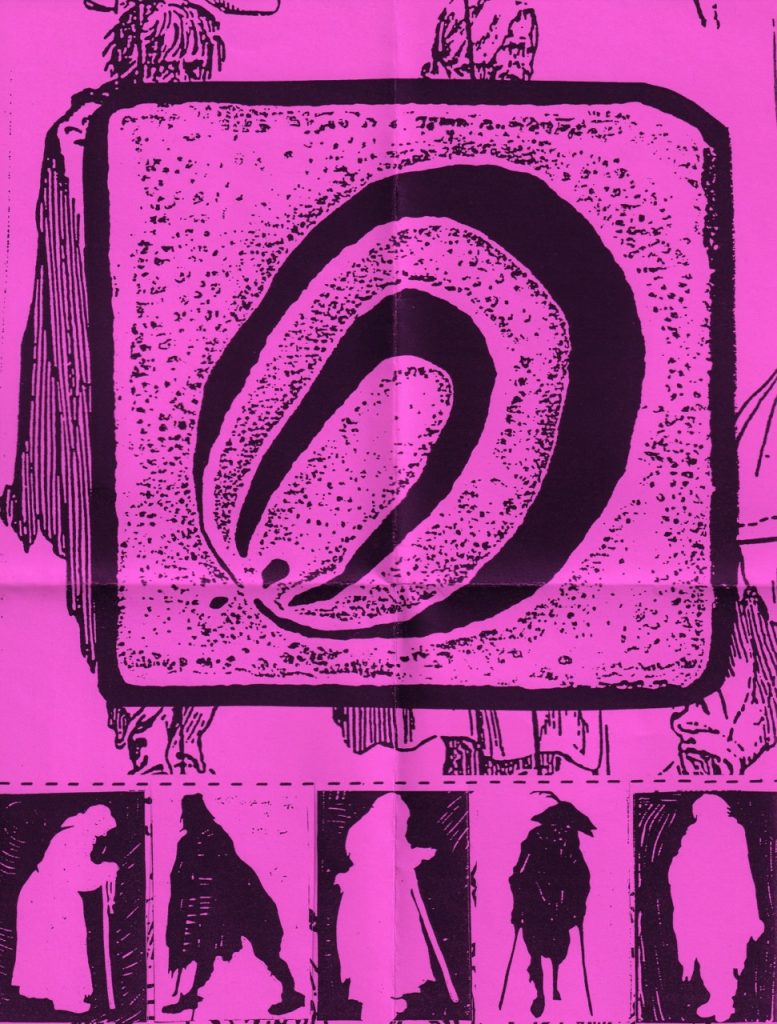
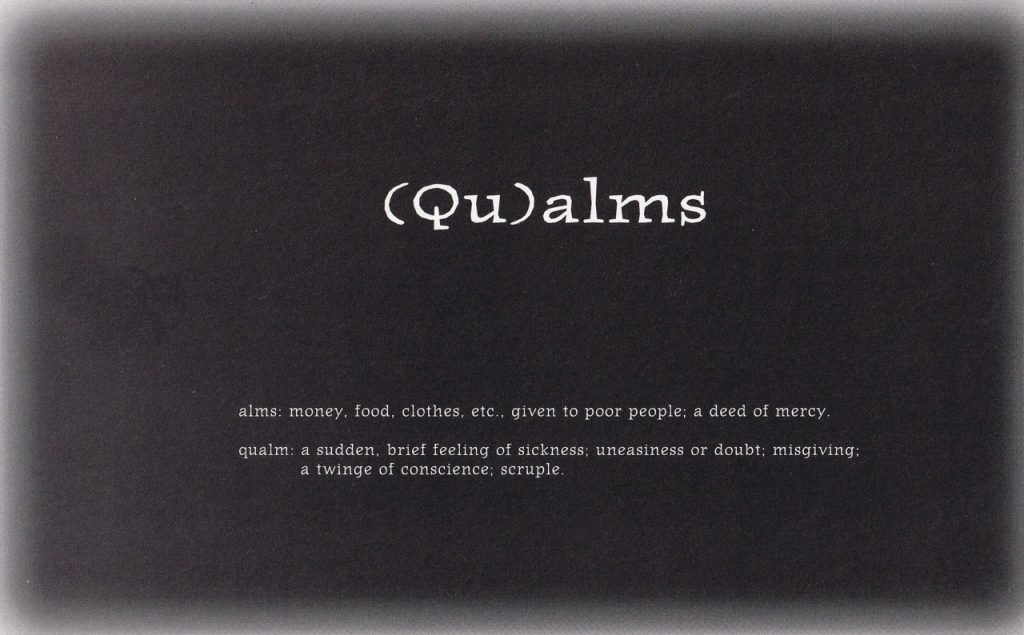
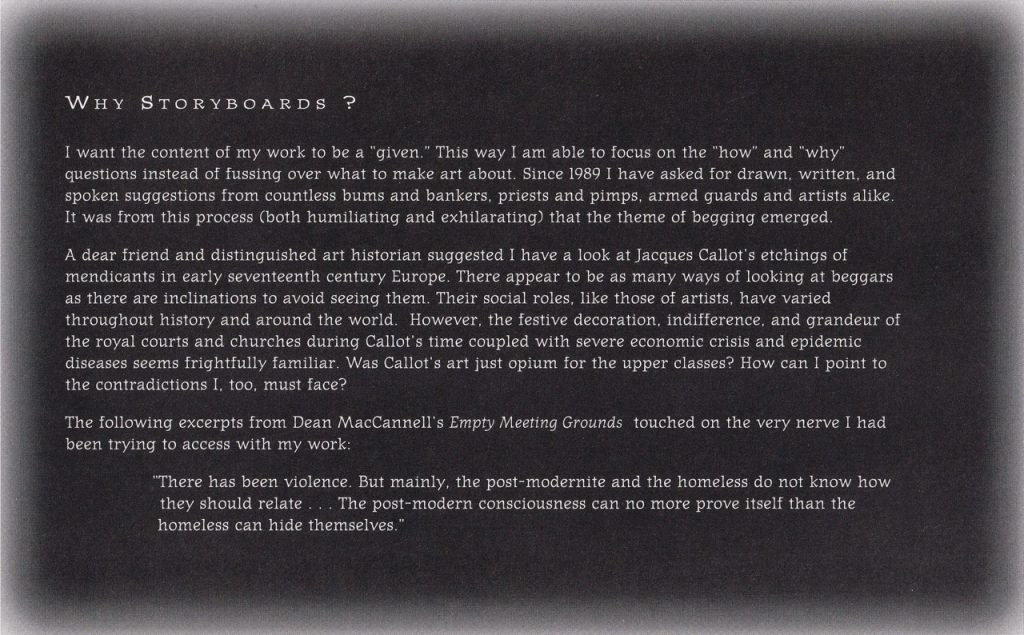
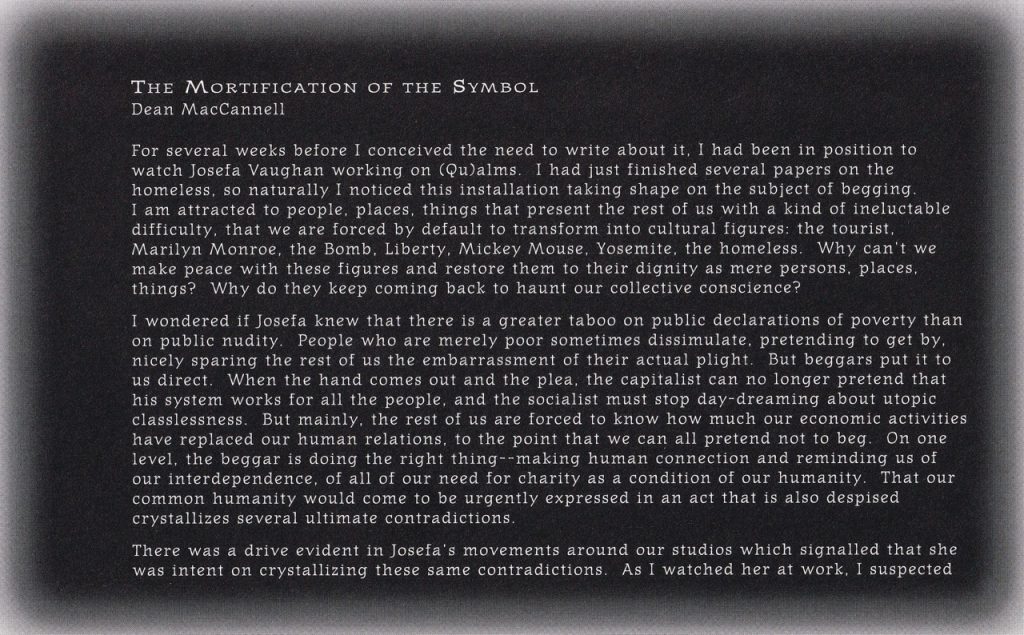
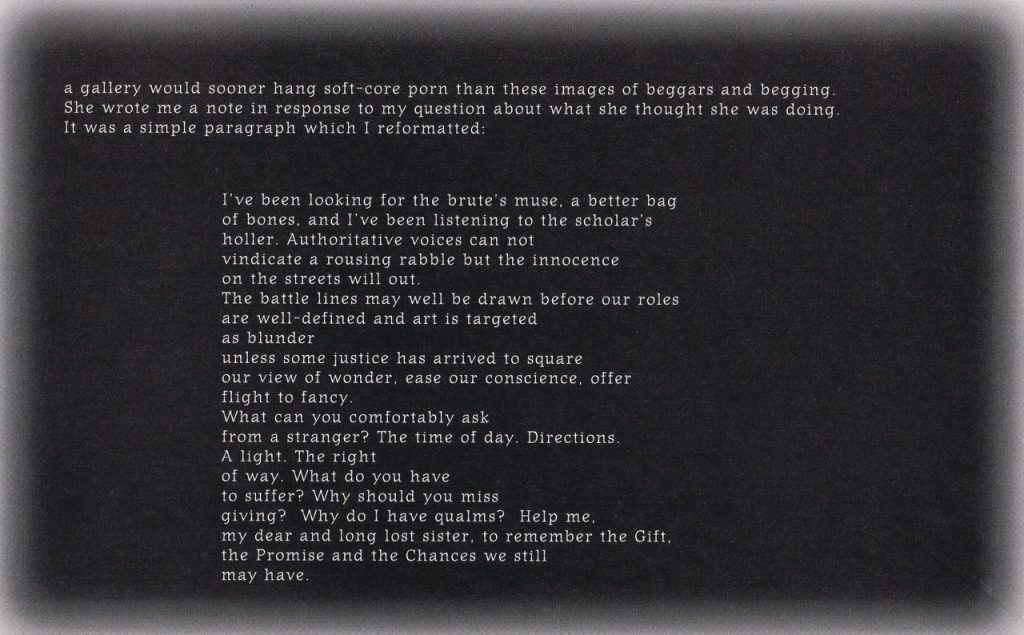
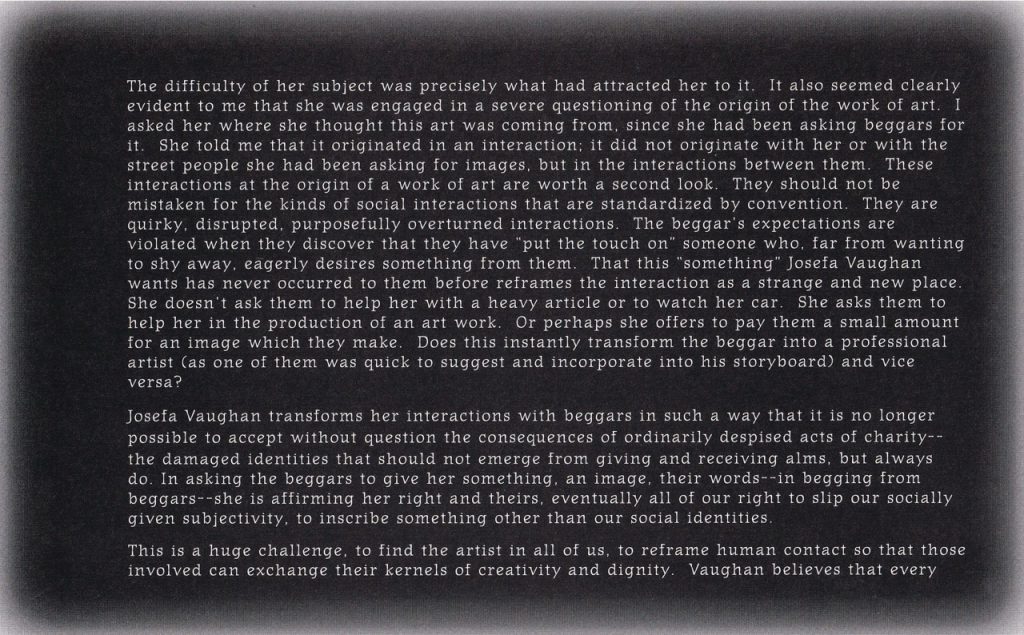
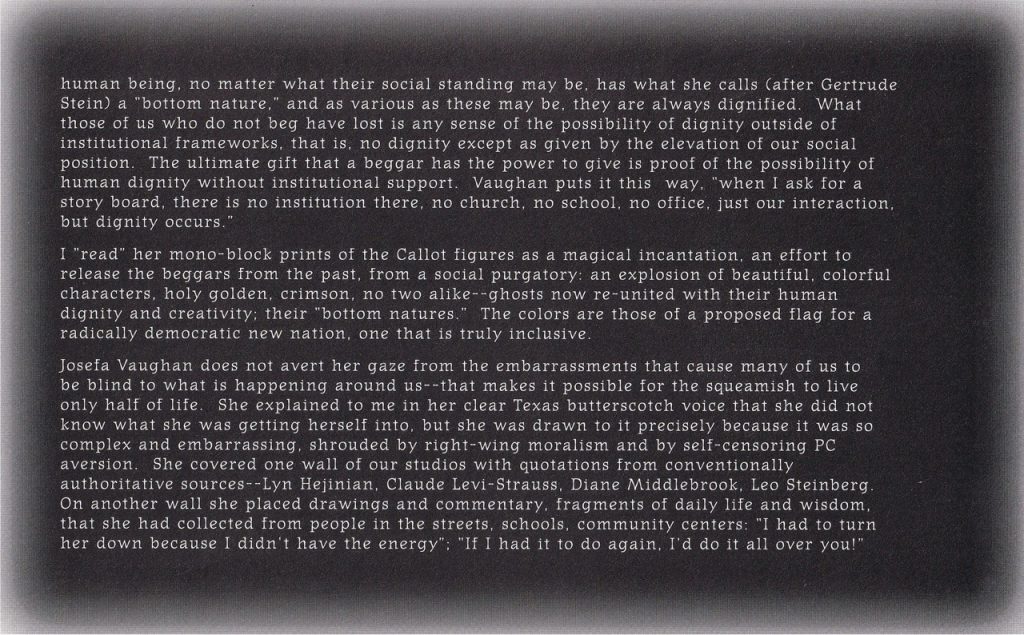
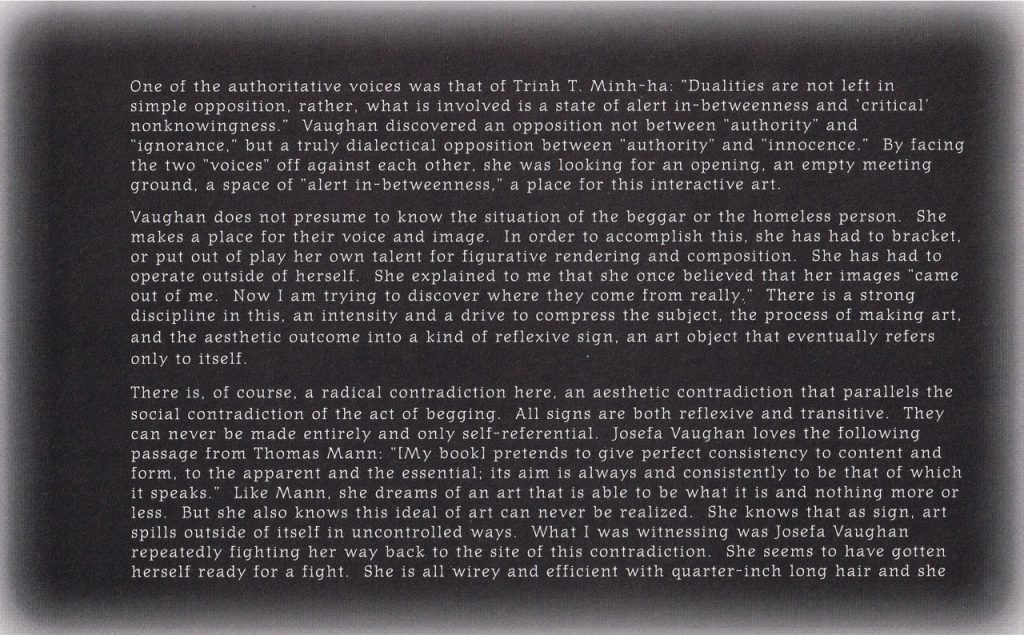
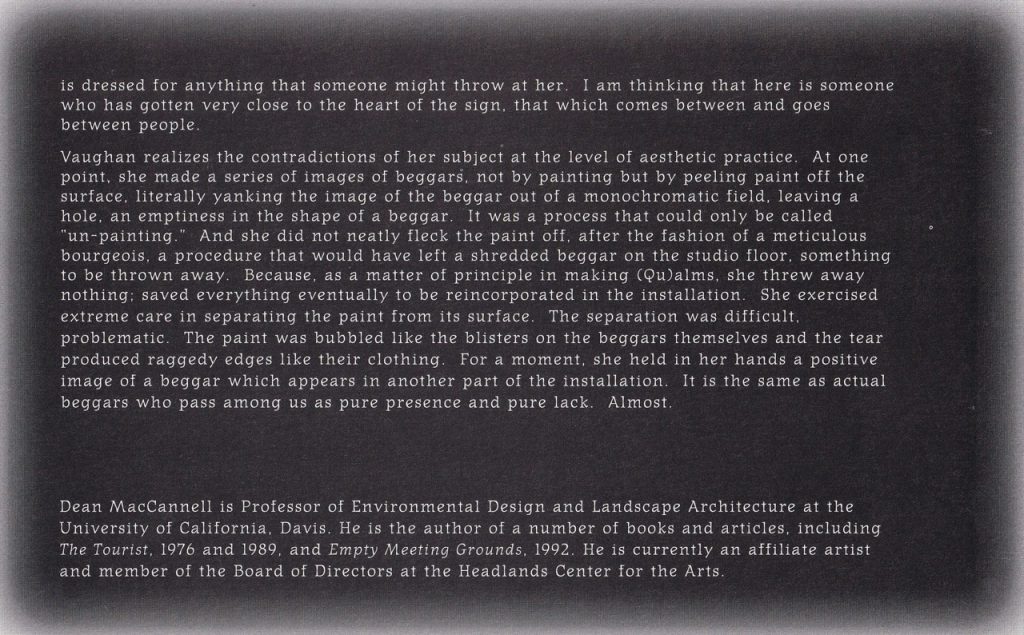
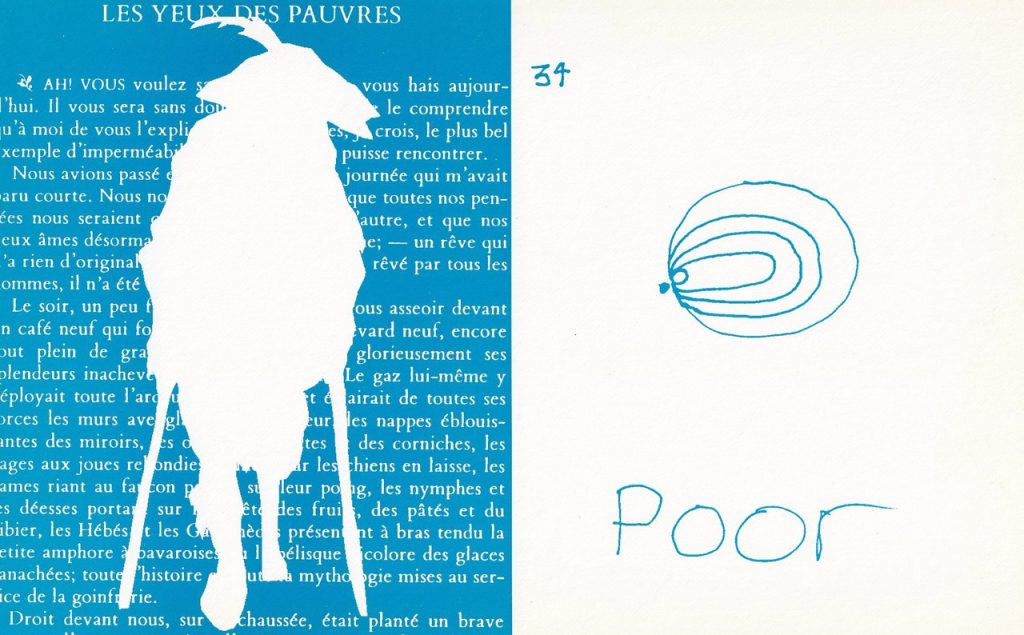
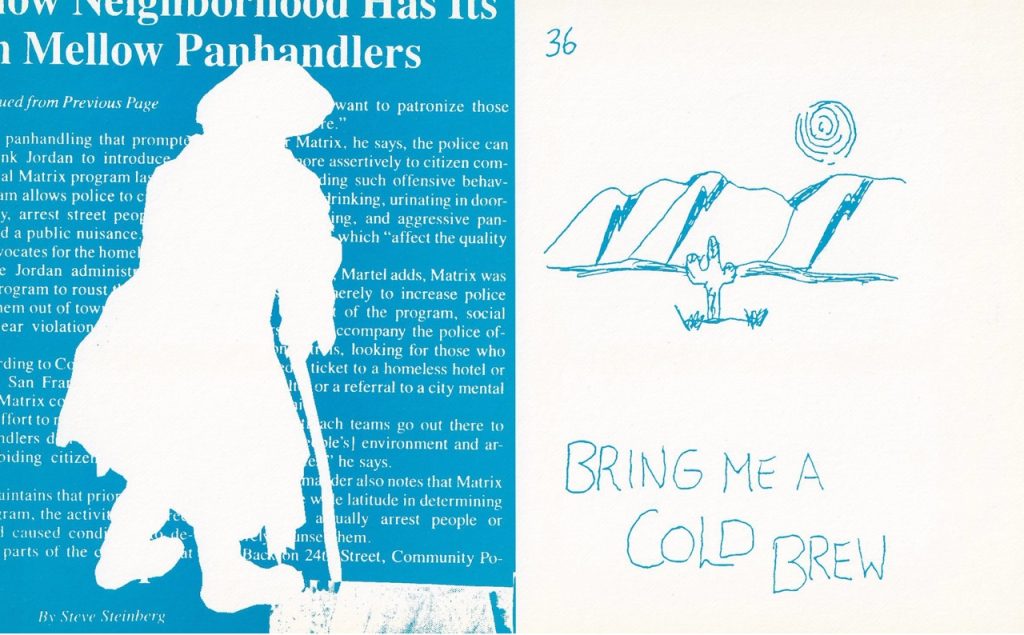
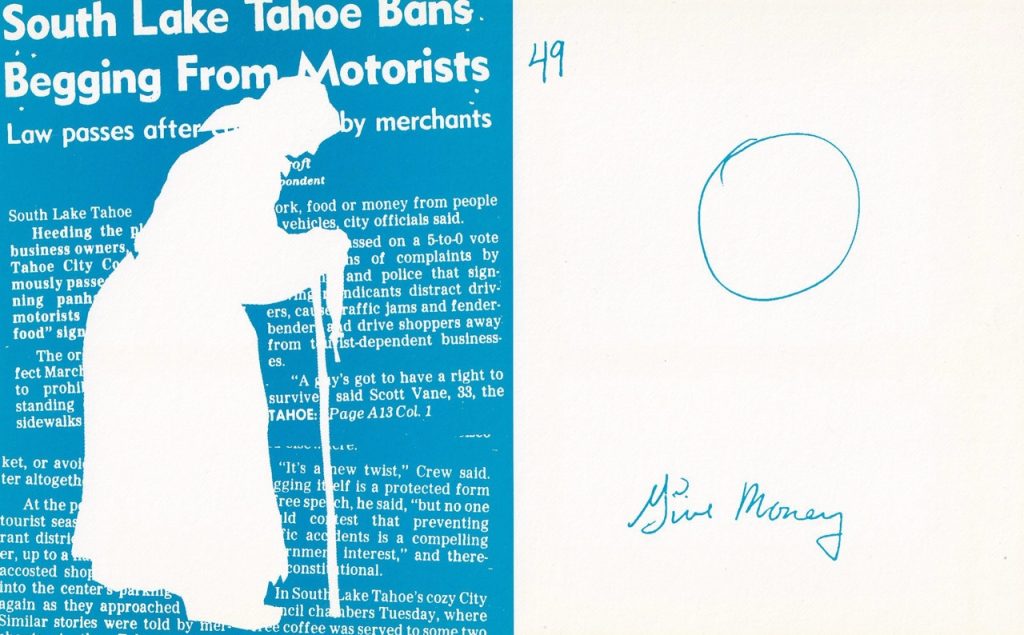
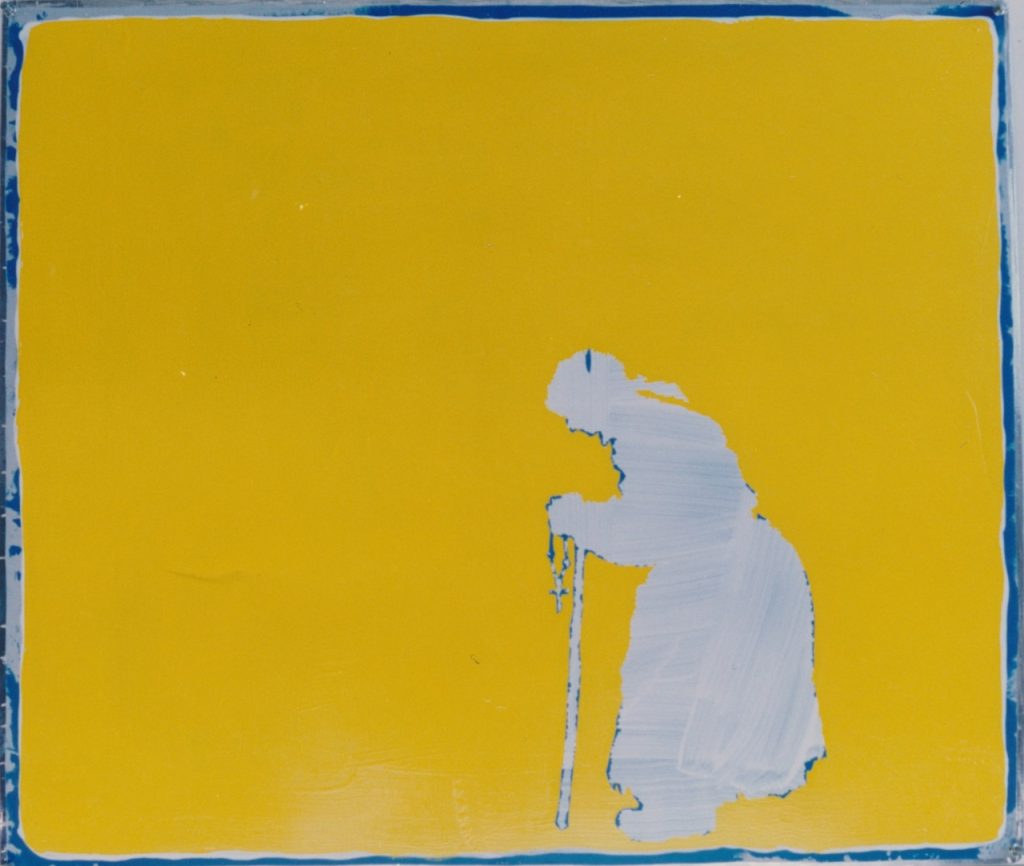
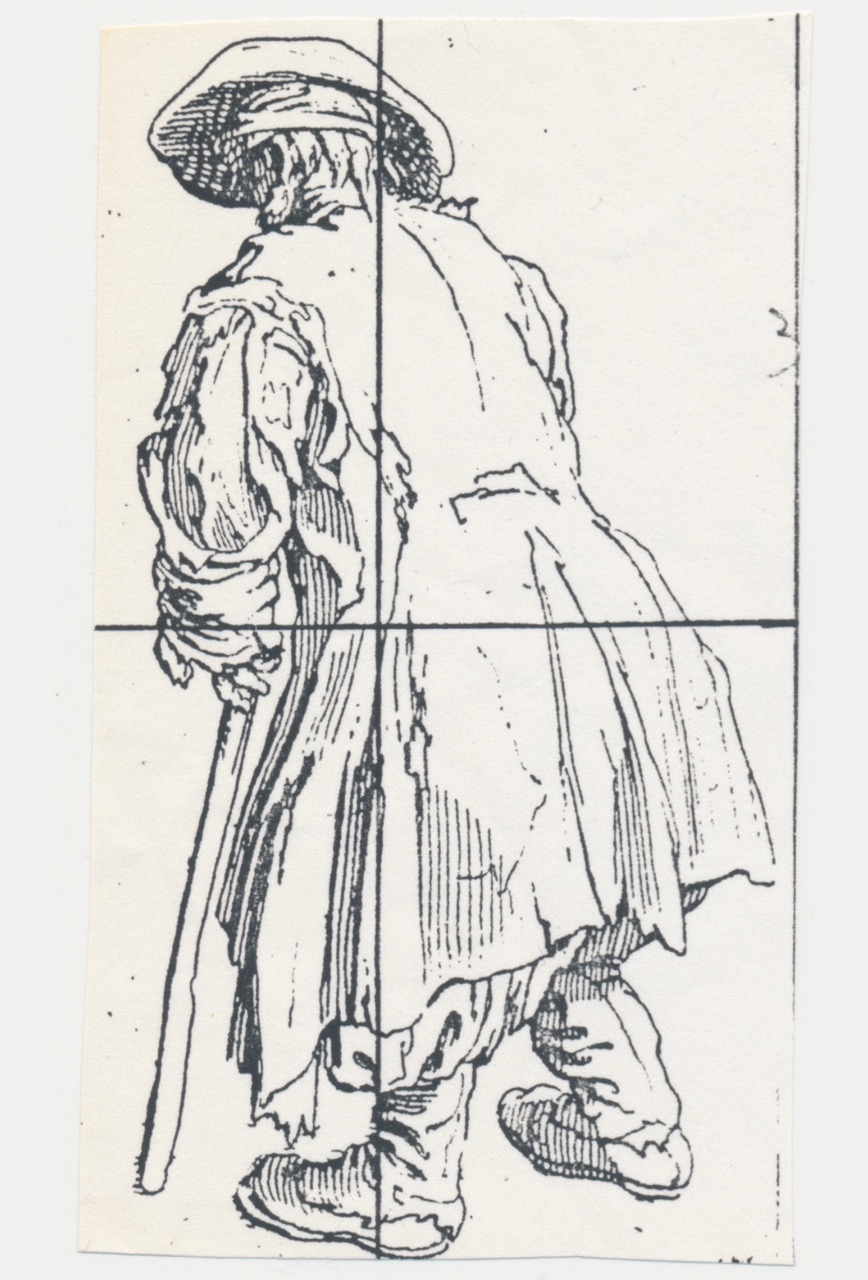
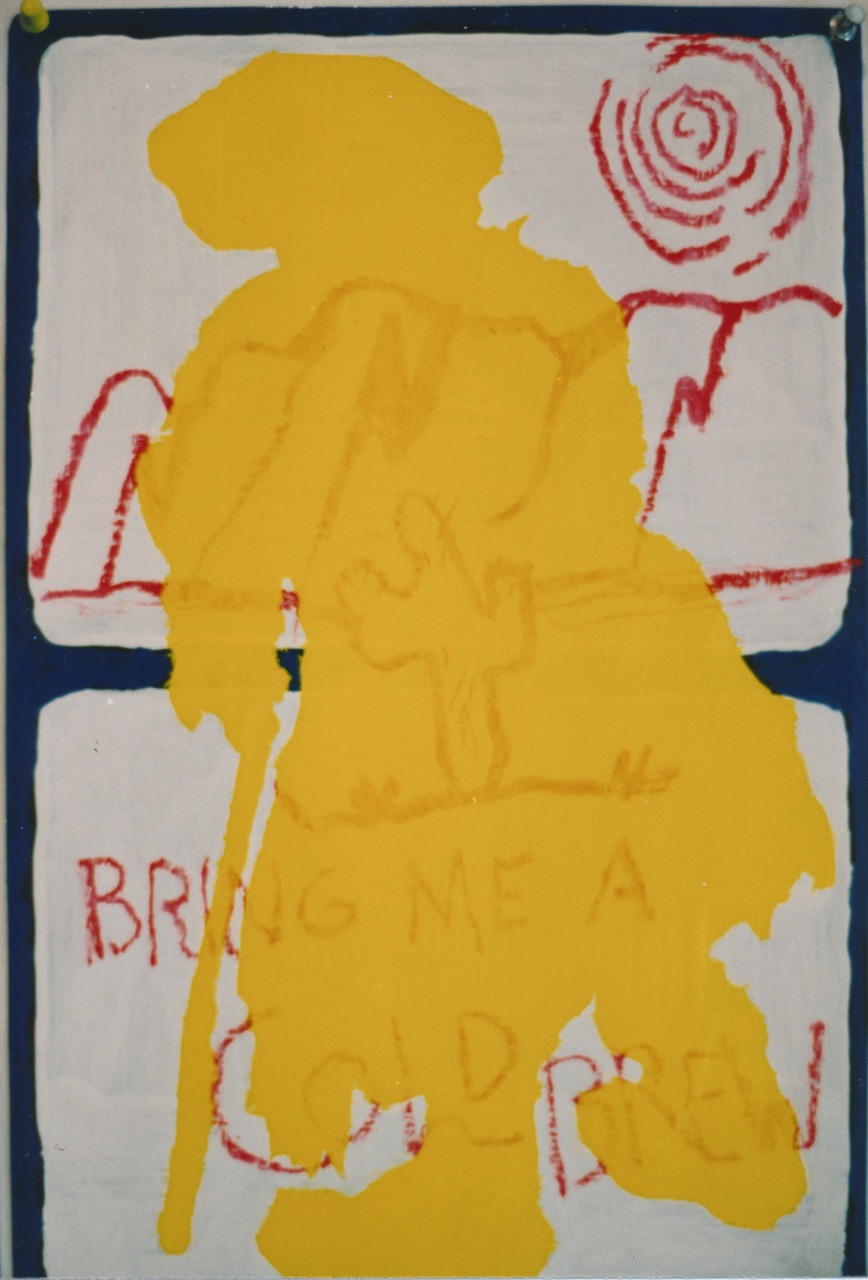
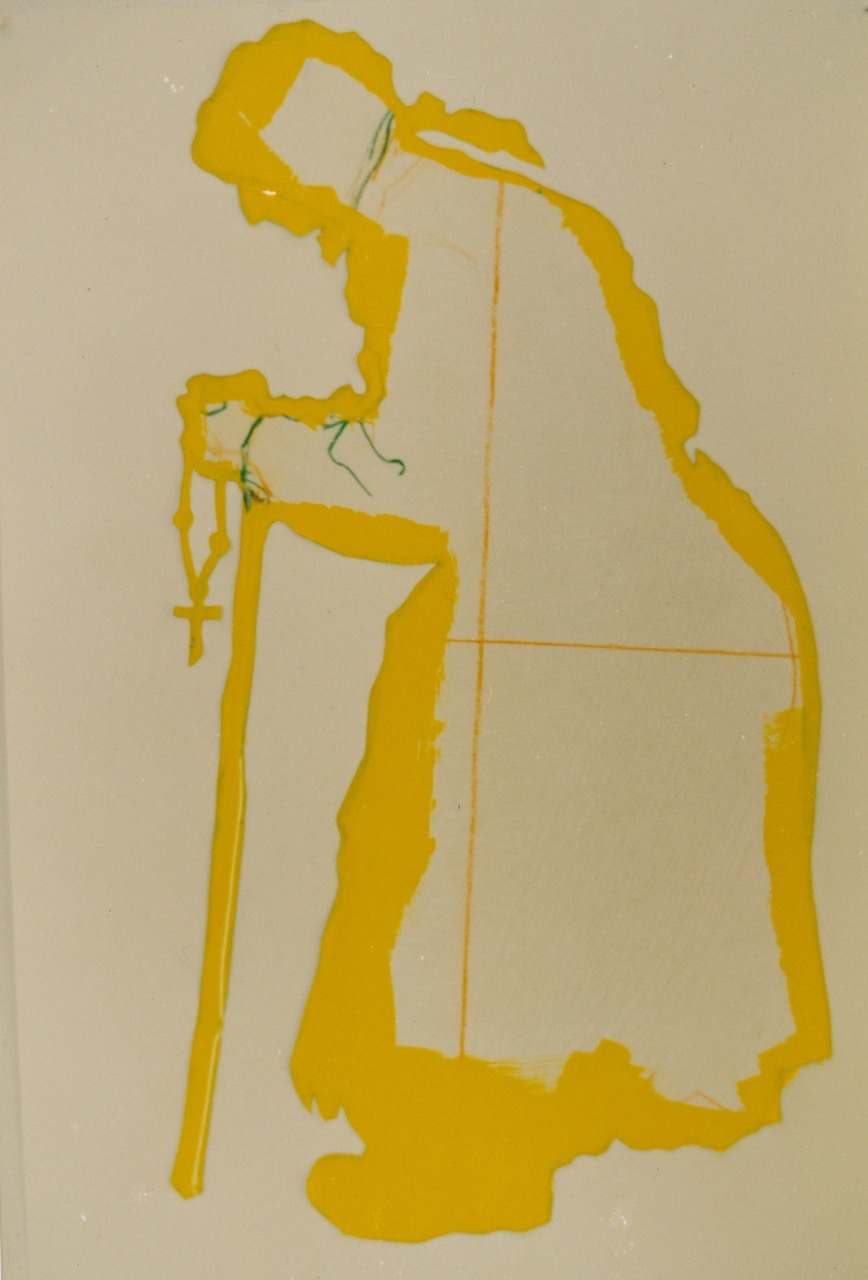
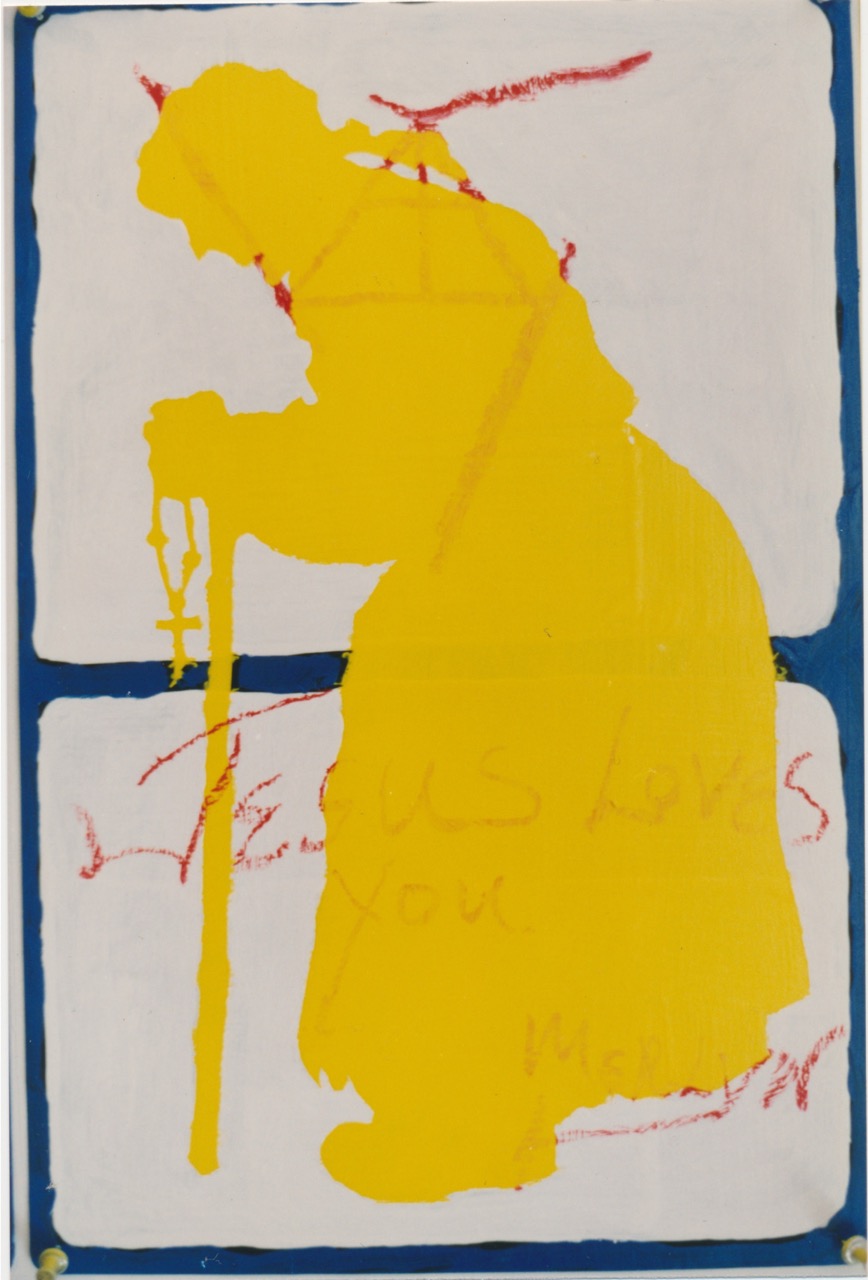
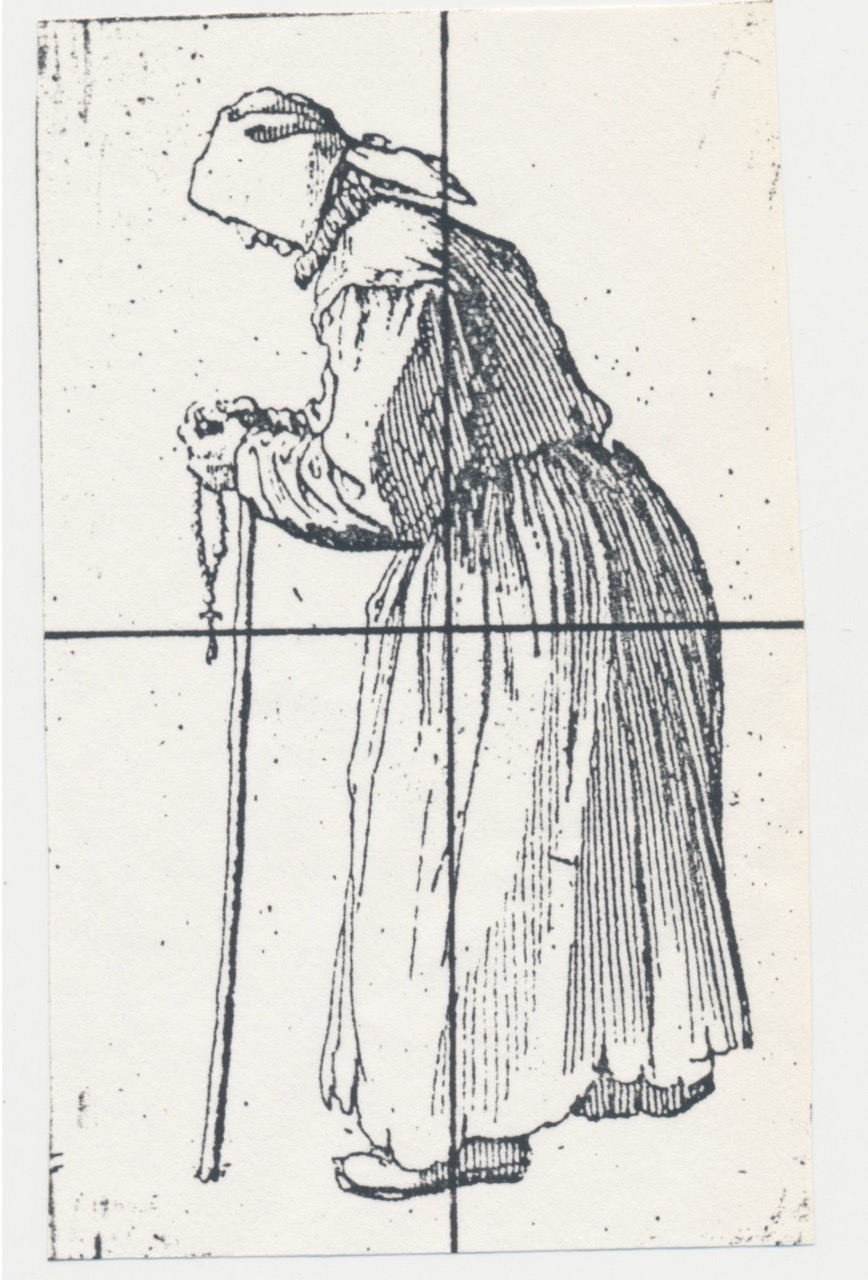
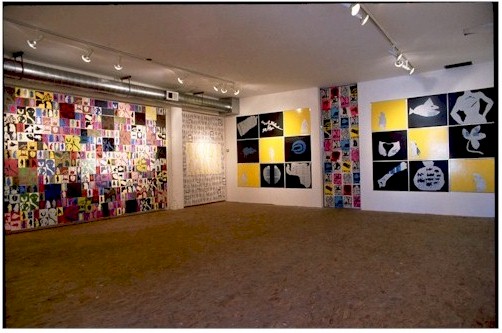
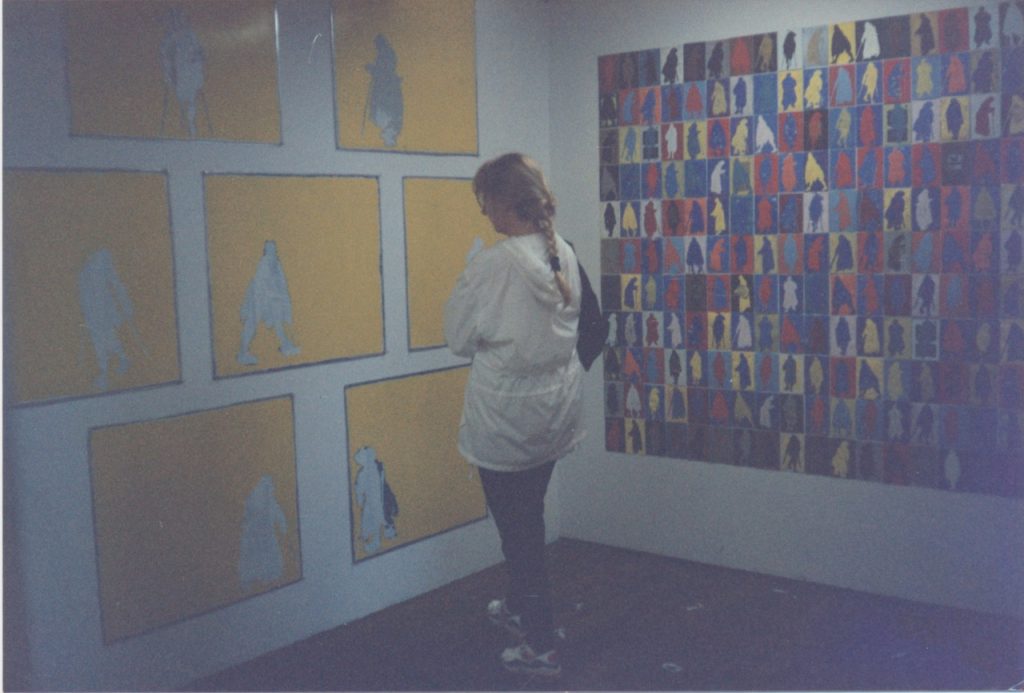
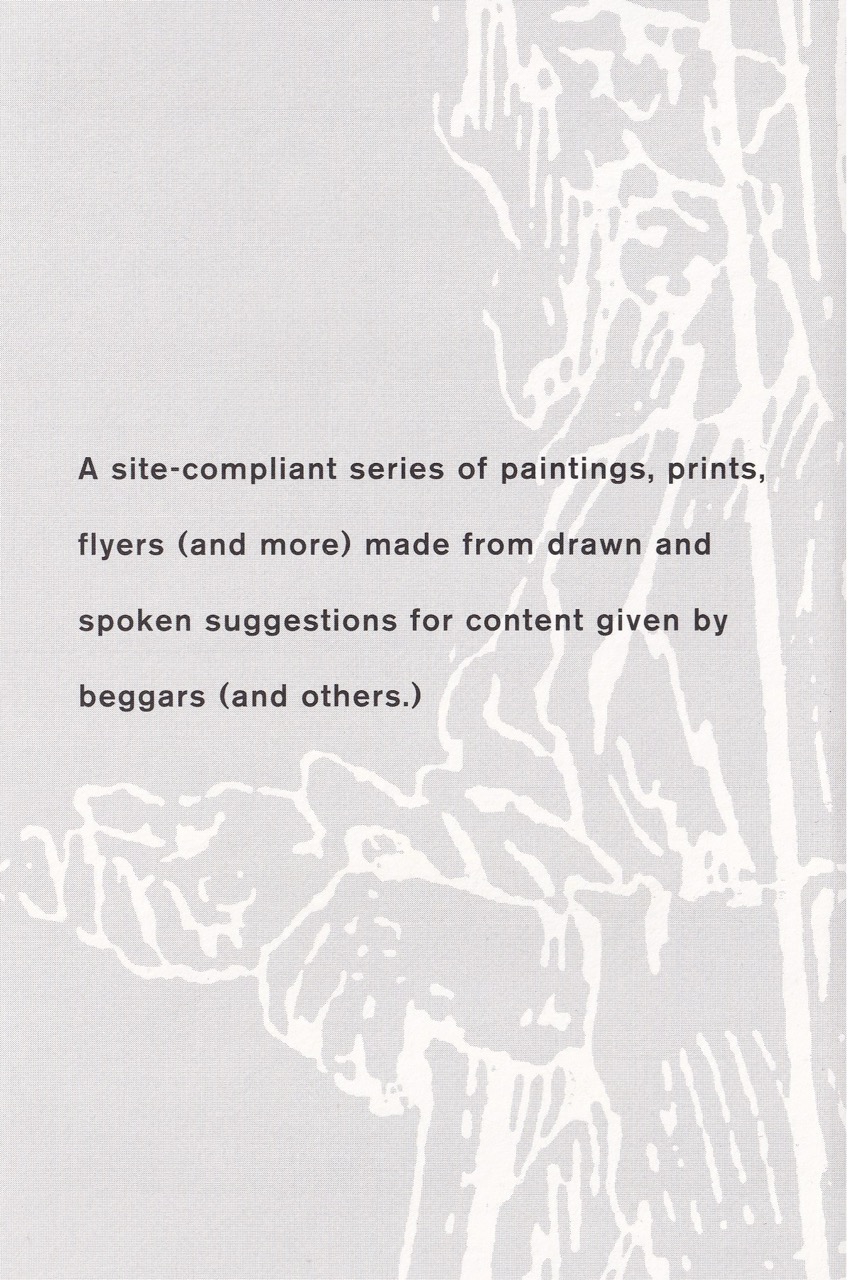
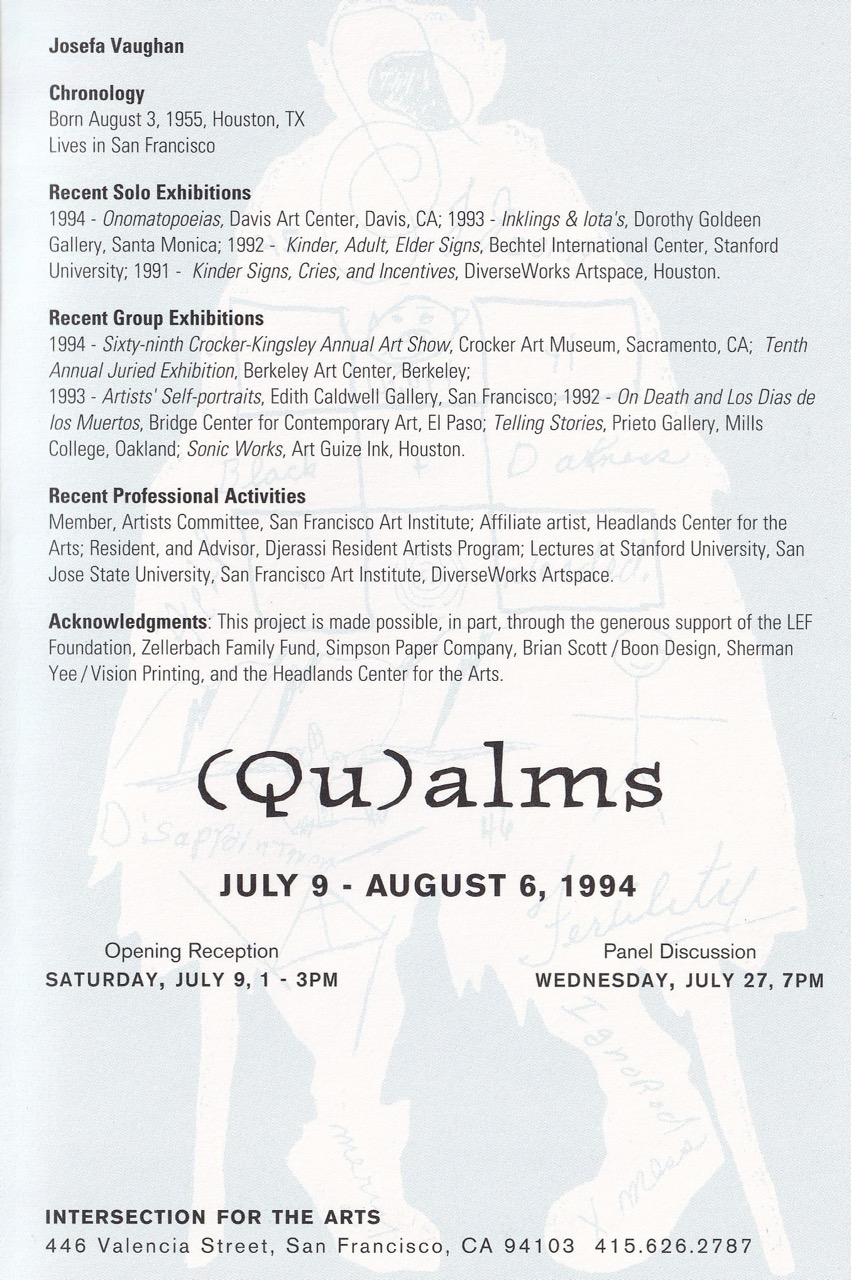
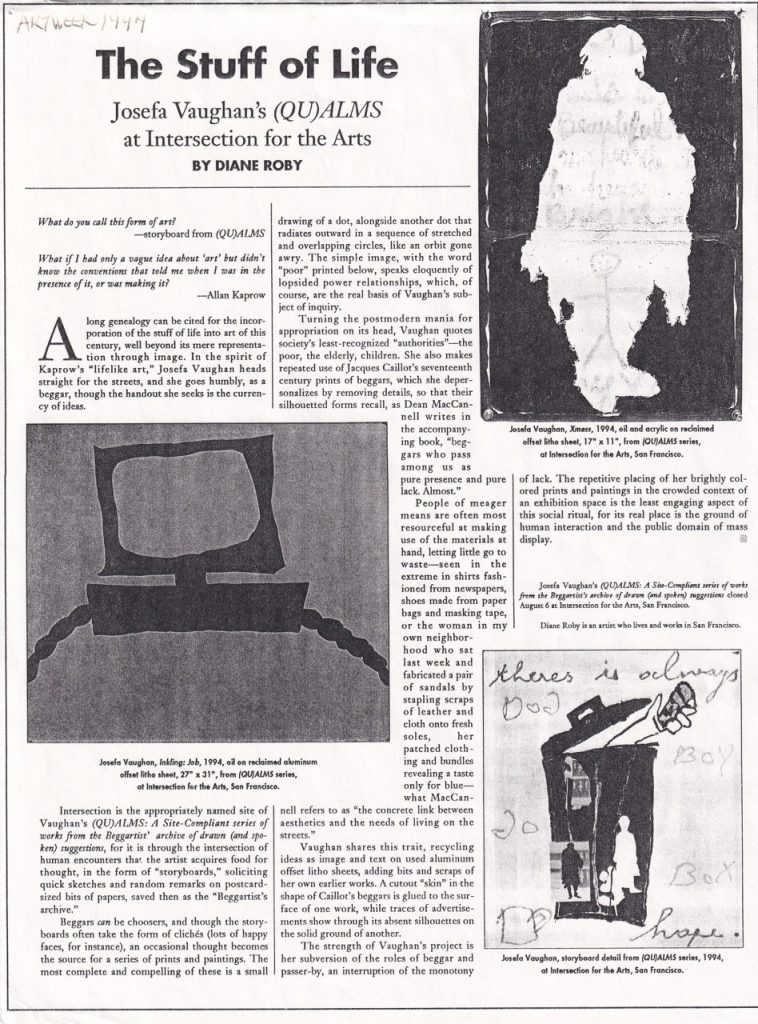
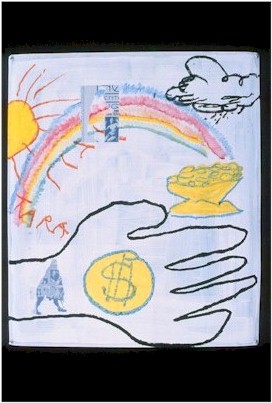
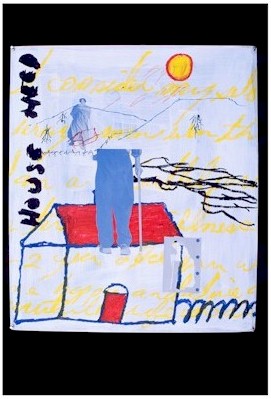
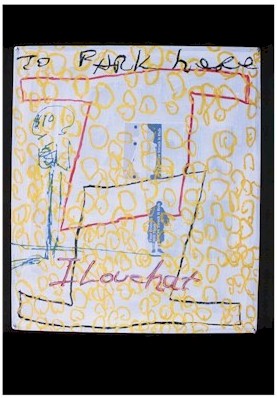
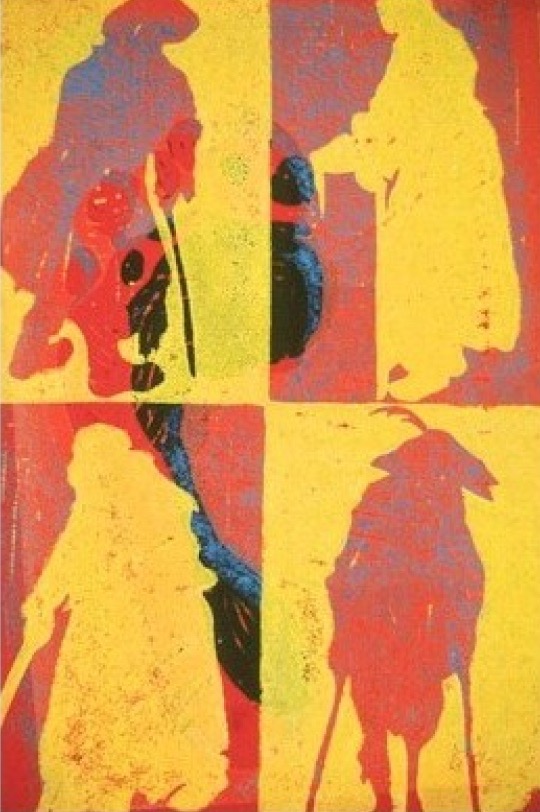
(Qu)alms investigates the role of the beggar across time and perspective. Josefa Vaughan drew on the French artist Jacques Callot’s (1592-1635) depictions of beggars to evidence the persistence of the beggar in society. In her now-signature compositional style, she also pulled from storyboards created by the beggars that she would encounter on the streets. While modern-day beggars are often disparaged, beggars in ancient times could be truth-seekers and storytellers, cast into their position by war or divisions of society.
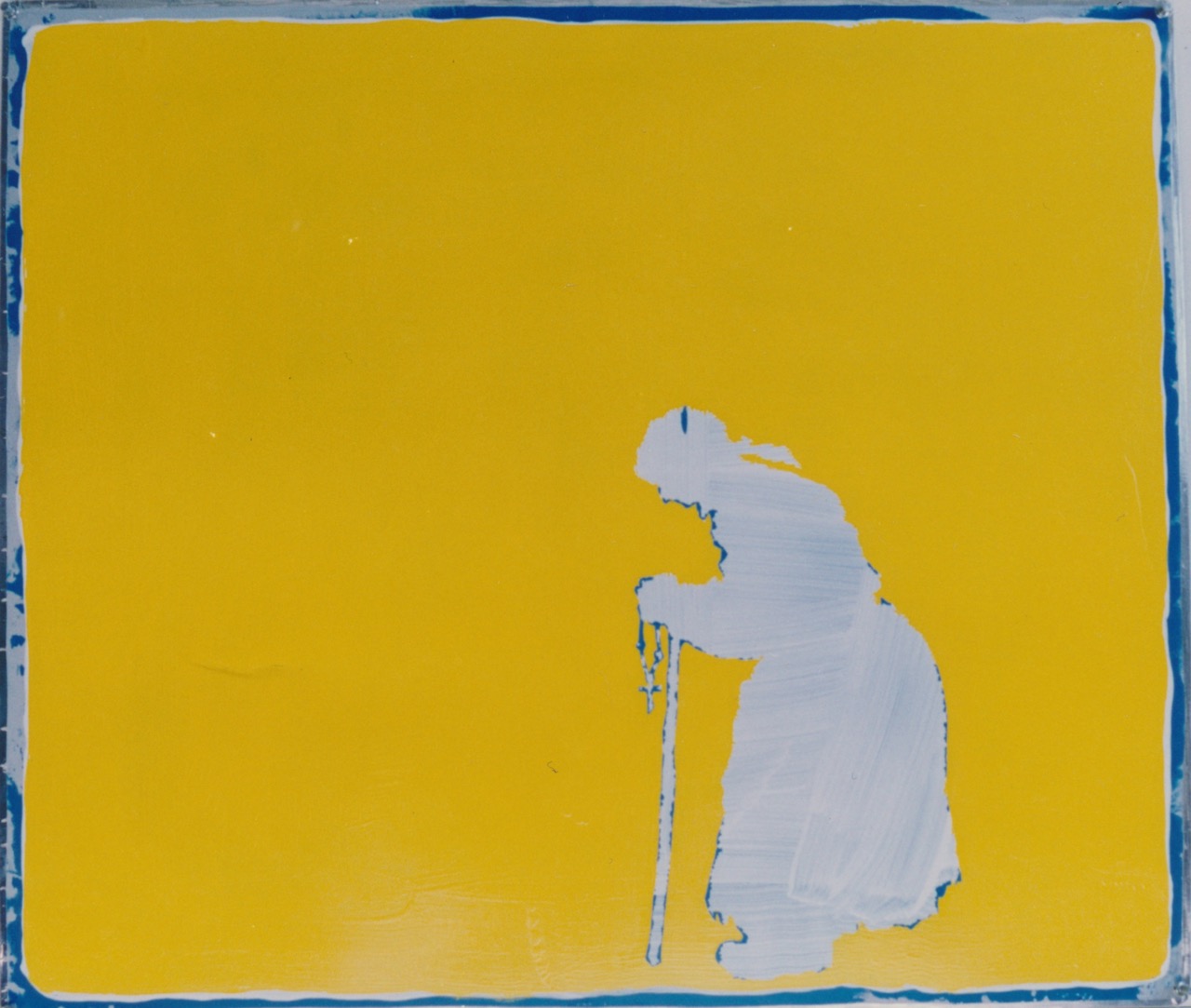
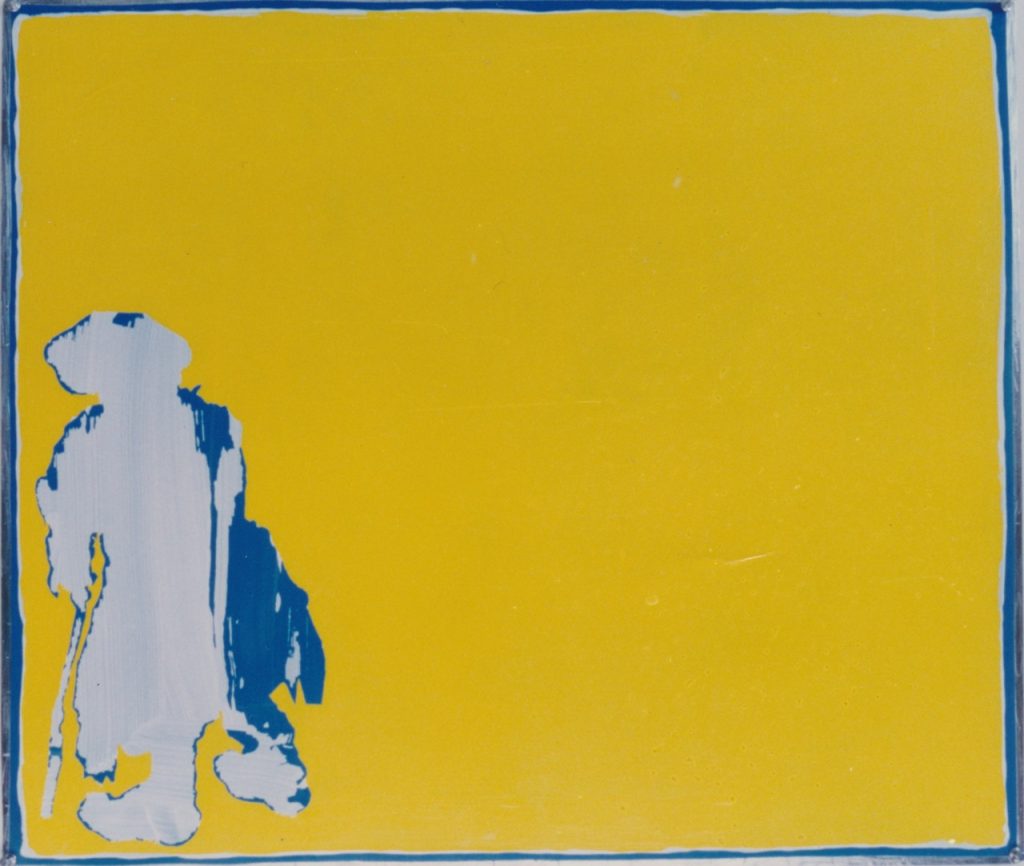
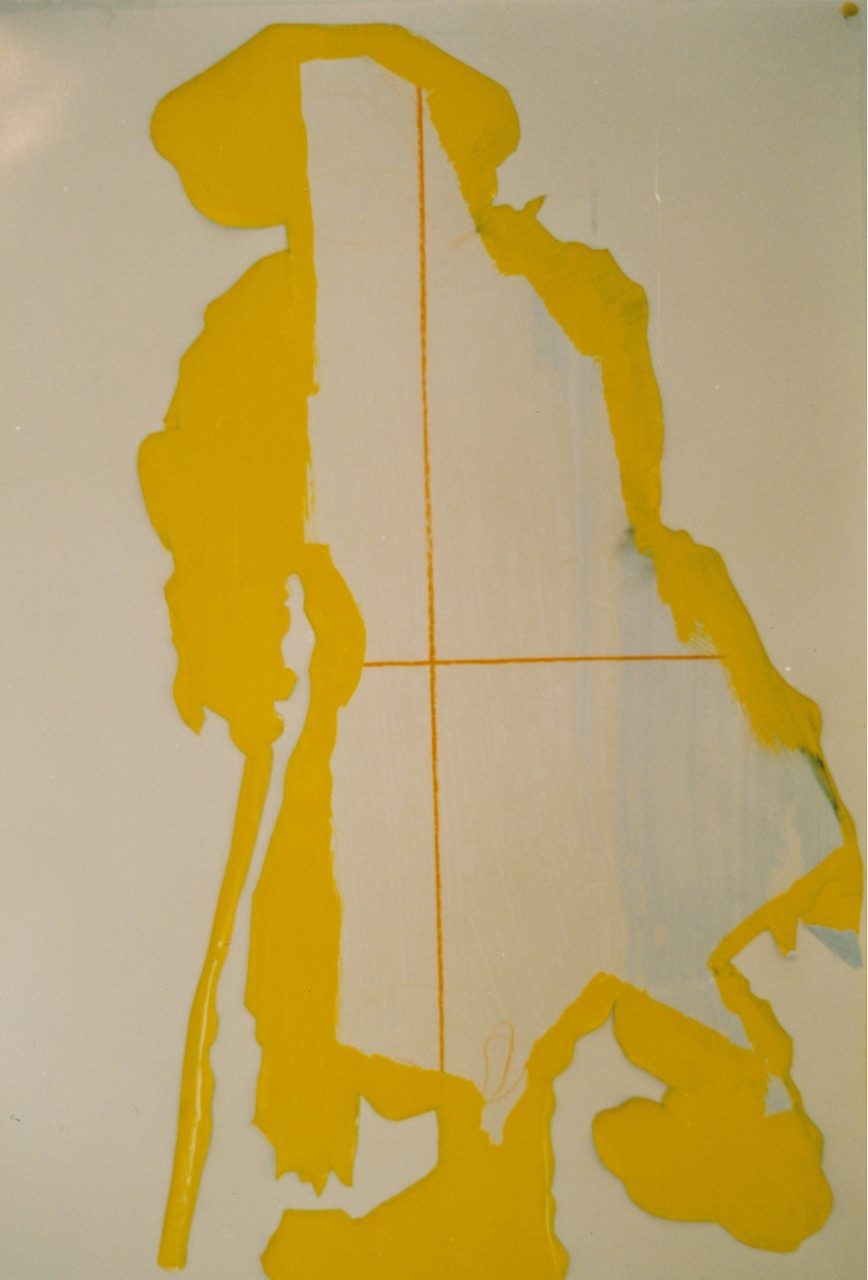
In (Qu)alms, Vaughan tears the image of the beggar from the panels, leaving only an empty space where they once were. Rather than a loud message of social justice, she leverages her materials to quietly convey the invisibilizing of the beggar and the silence of the passerby, hoping to even just “get the conversation going.”
Year
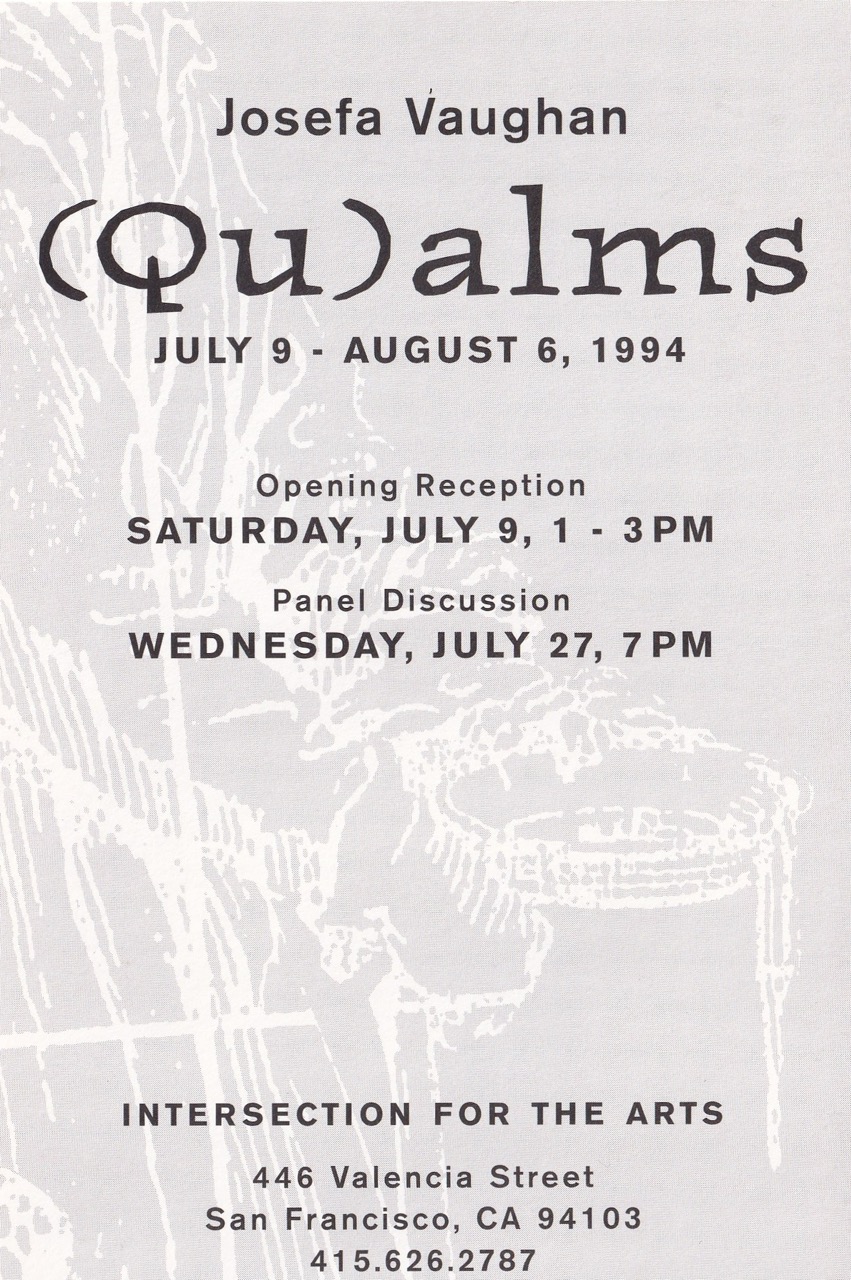
1994
Exhibition
Intersection for the Arts, San Francisco
Collaborators
Beggars who created storyboards; Leo Steinberg who provided ideas
Materials
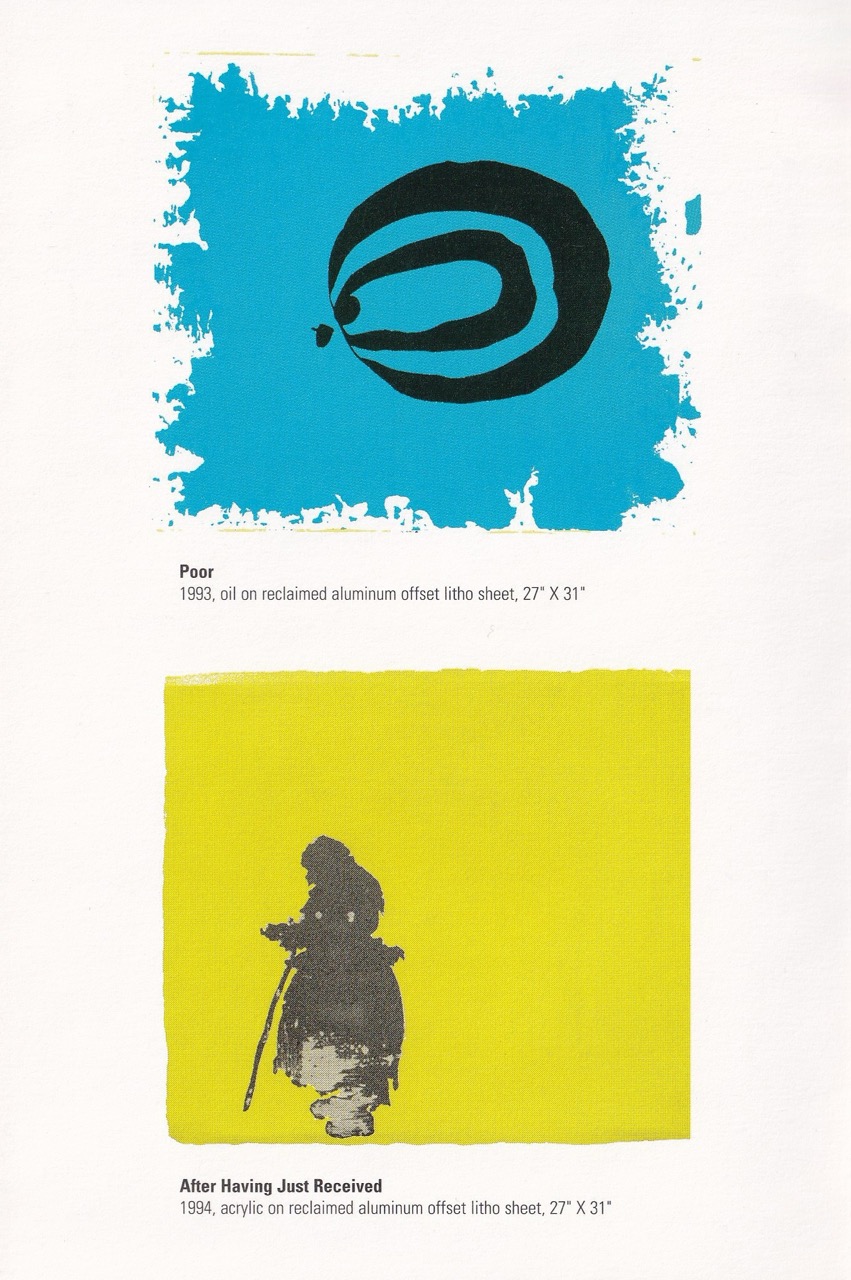
Mixed media on reclaimed aluminum offset litho sheets
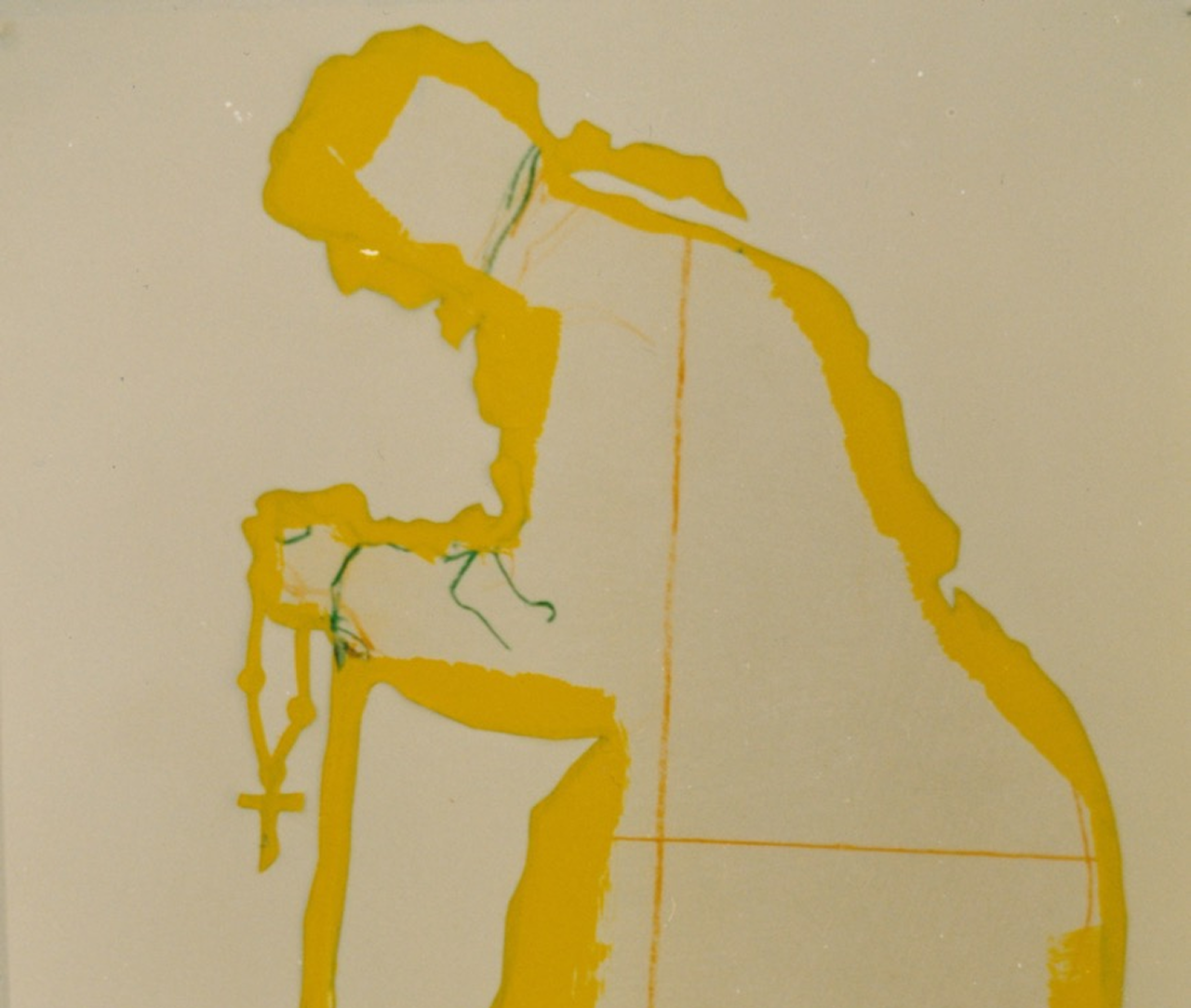
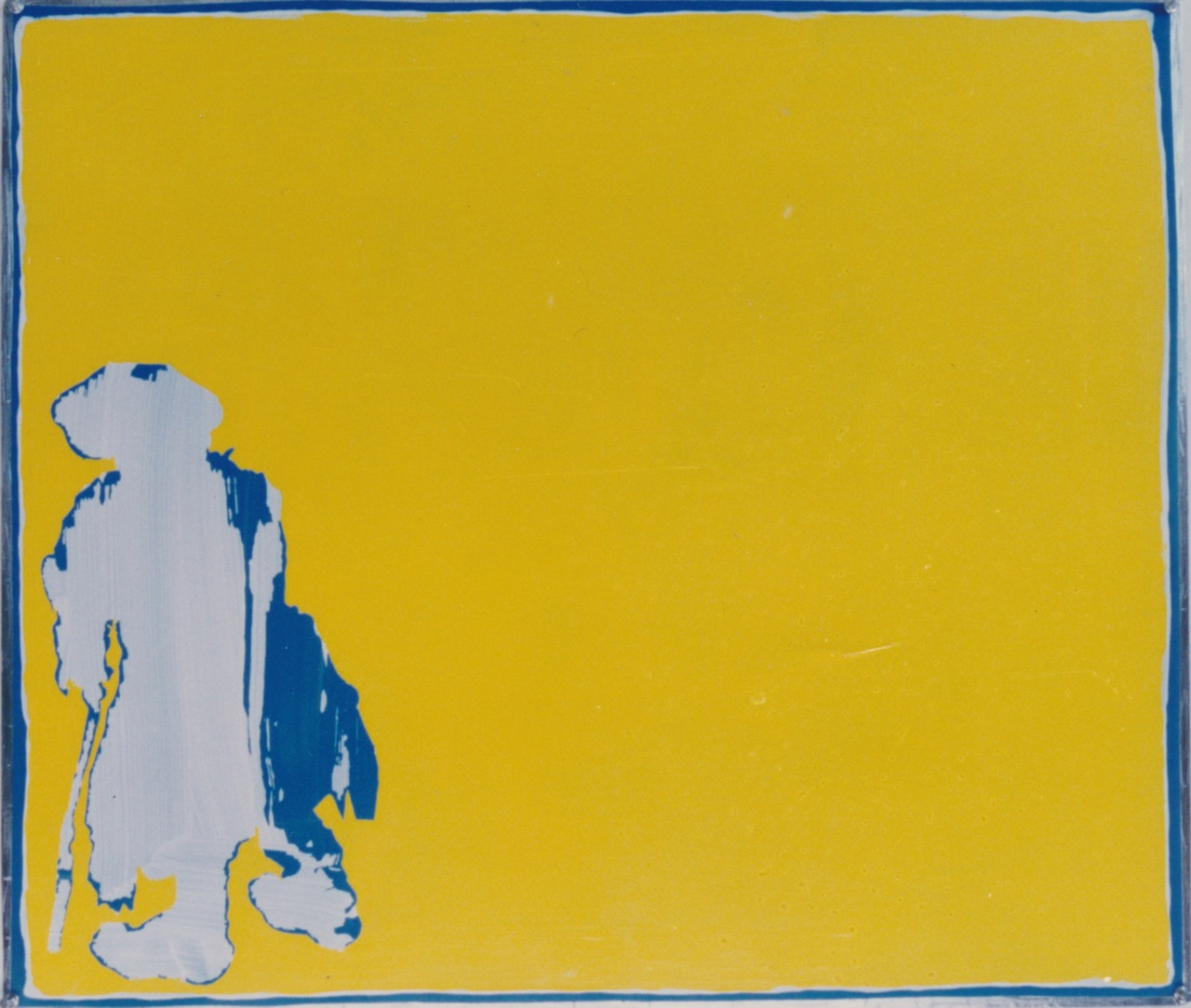
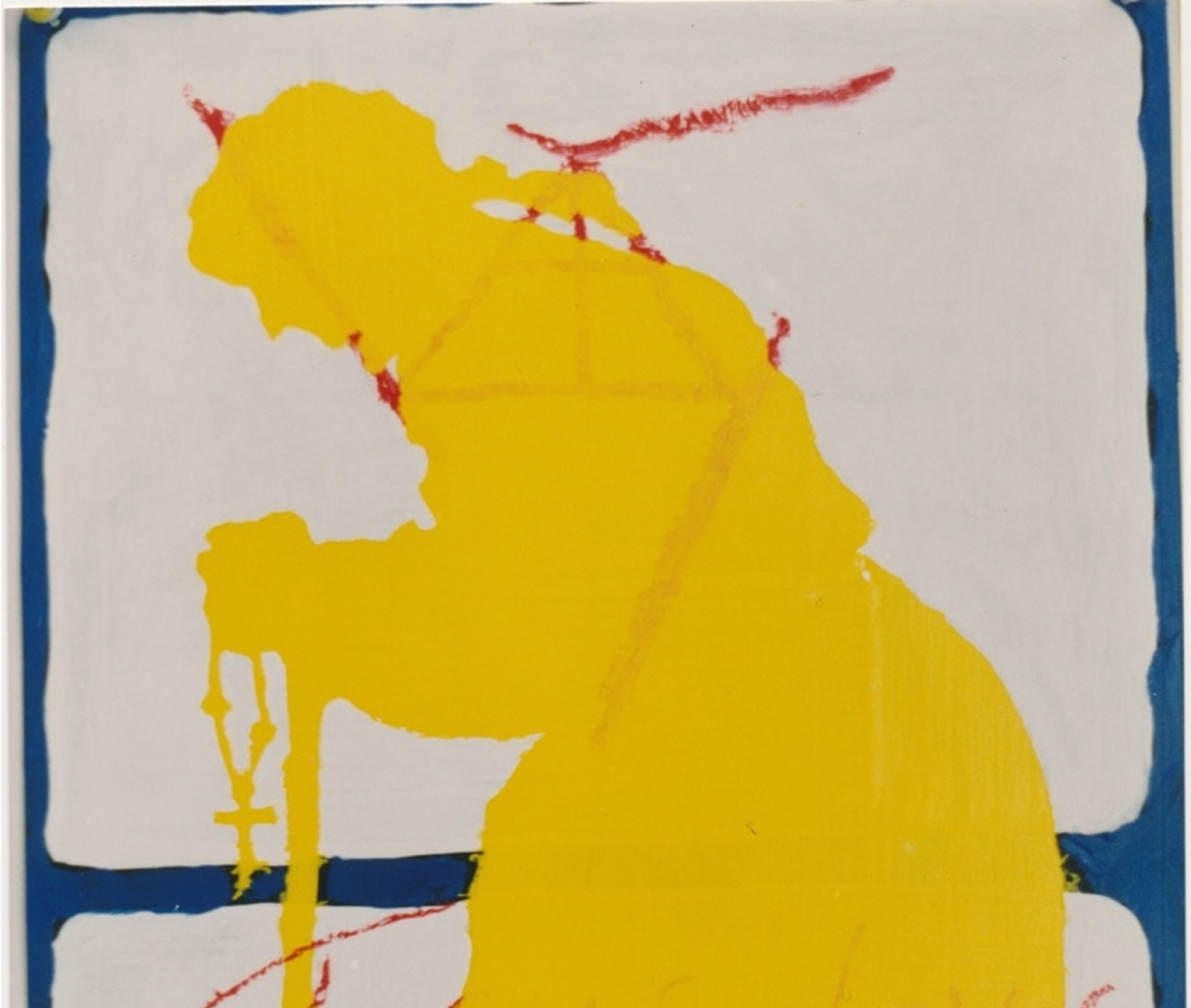
Panels
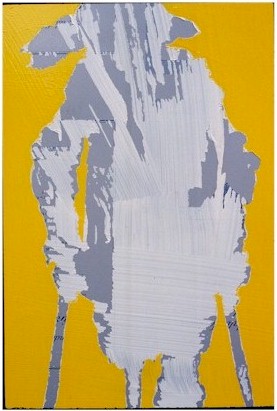
In her exhibition at the Intersection for the Arts, Vaughan couples the Callot-inspired panels with some panels from Inklings & Iotas.
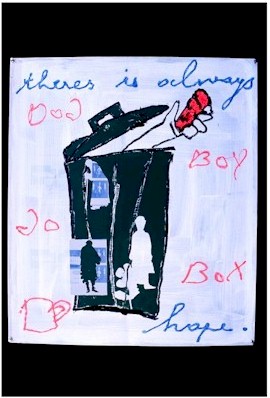
Additionally, she explored the dual sides of the hand-drawn stencils by painting the positive silhouette directly onto storyboards gathered from beggars.
You can, as an artist, try to say something big about life; or to be content to make the stuff in your hands come to life. And this humbler task is the greater, for all else merely follows.
– Leo Steinberg
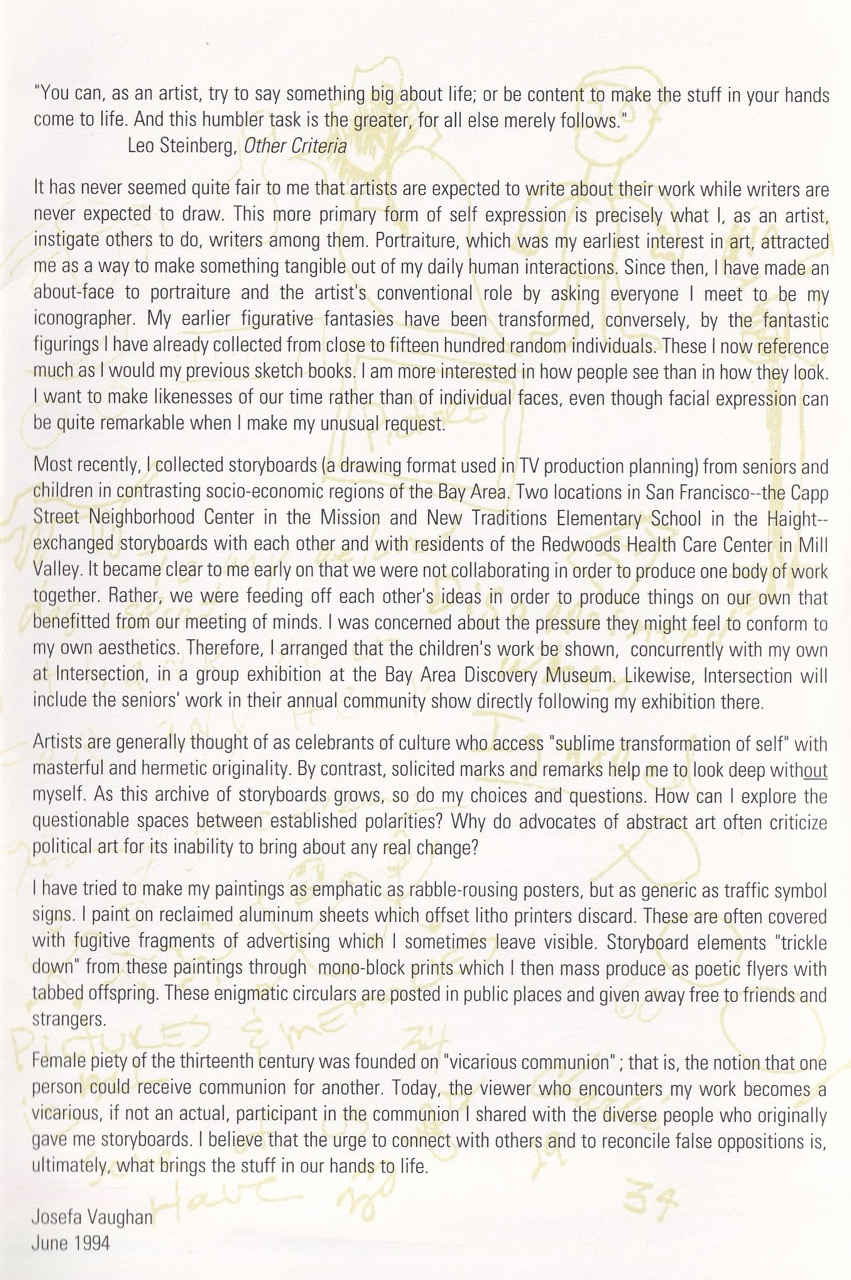
I am more interested in how people see than in how they look.
– Josefa Vaughan
Prints
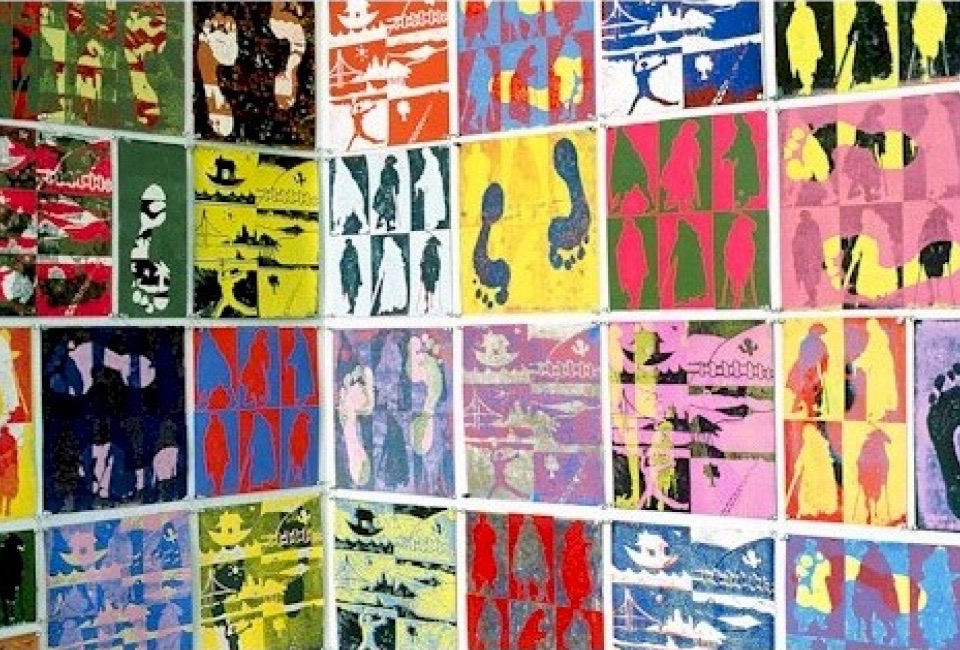
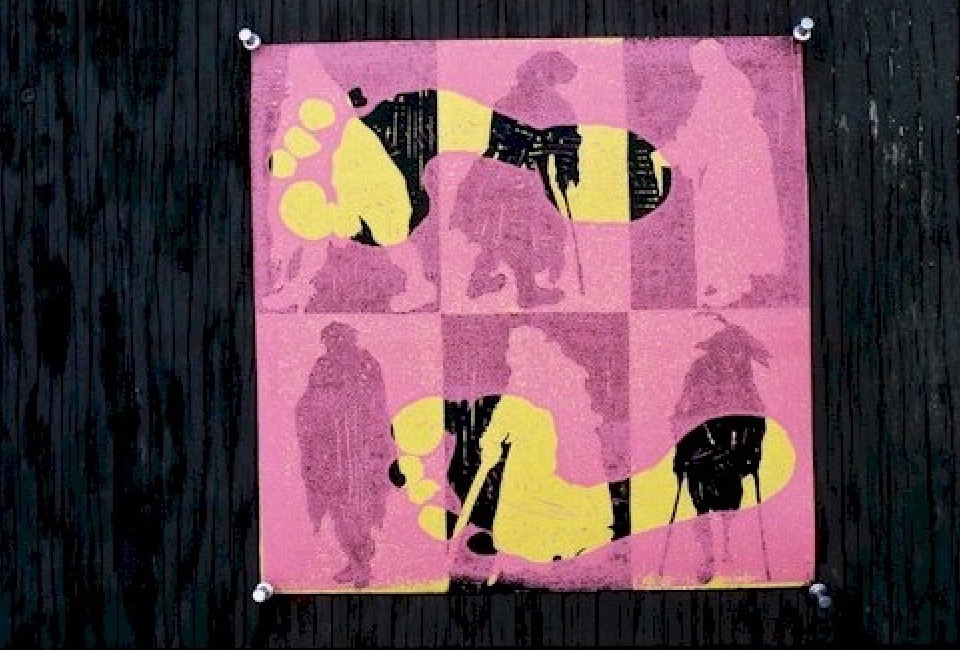
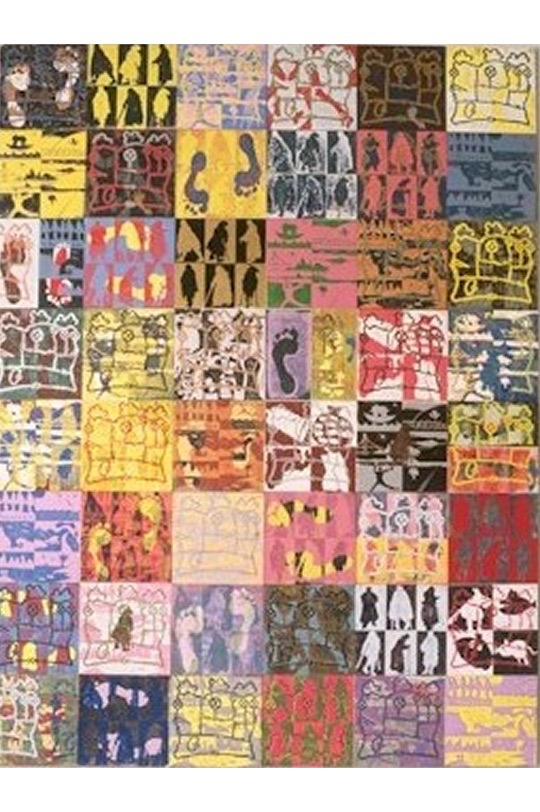
Continuing to practice her trickle-down theory, Vaughan created prints from the Callot and storyboard materials.
While placing different shapes in conversation, she likewise explored how the beggar’s silhouette could be multiplied and disseminated across forms.
Flyers & Artist Book
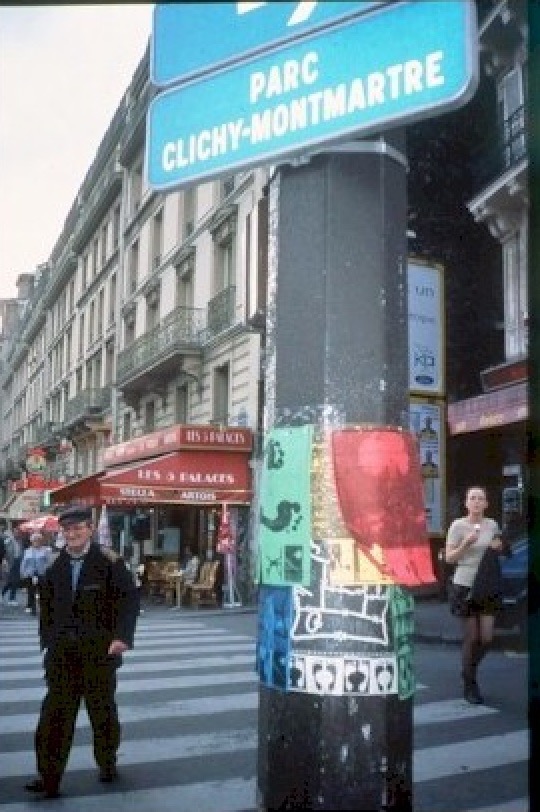
To spread (Qu)alms far further than the walls of the gallery, Vaughan created flyers and posted them across the city. With pull-off tabs to expand their journey, (Qu)alms returned to the street posts and corners of its subject material.
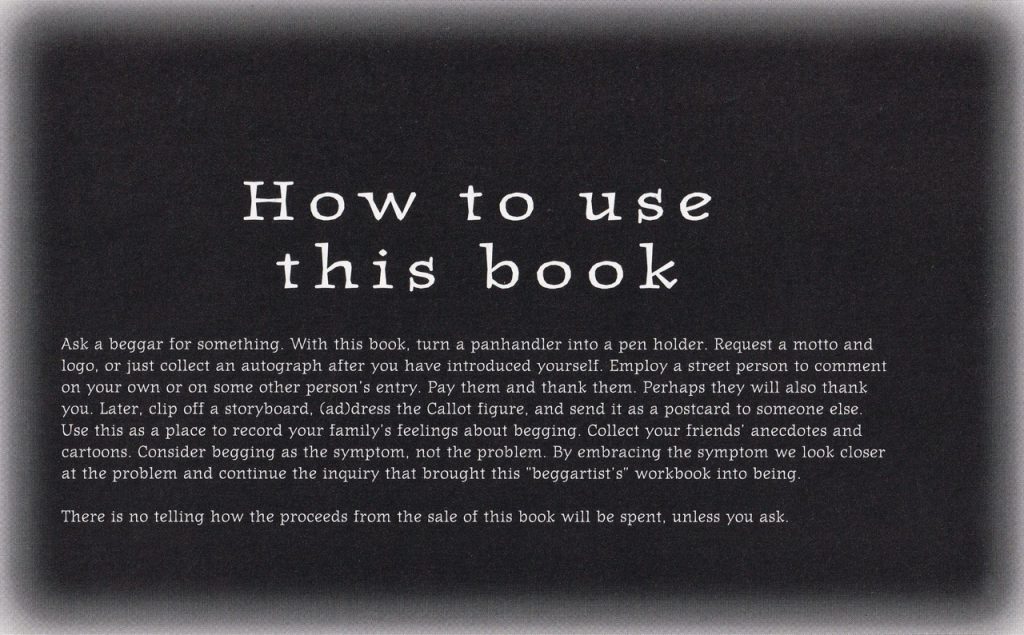
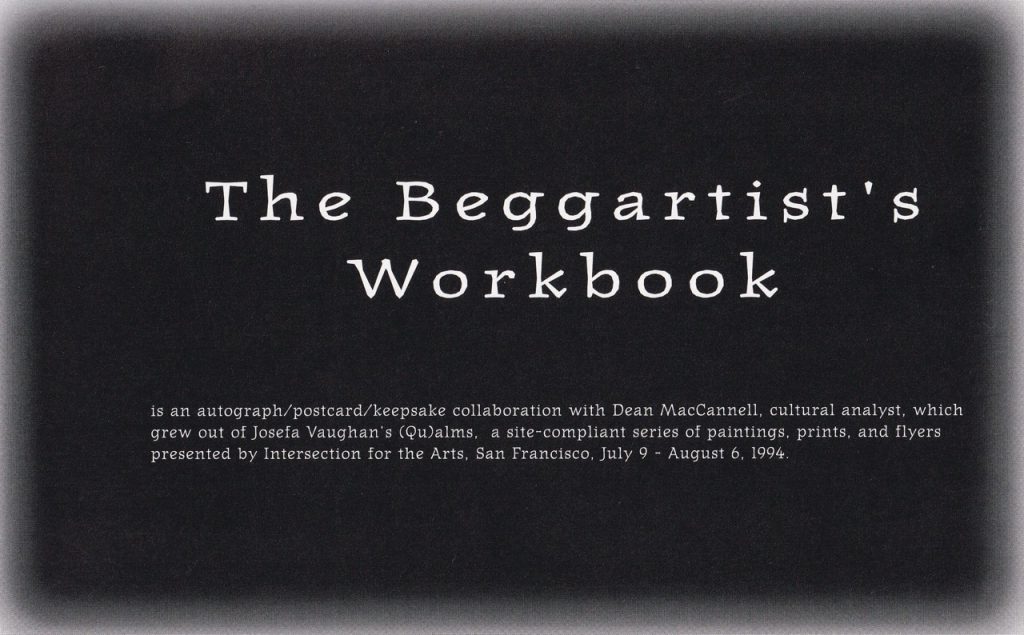
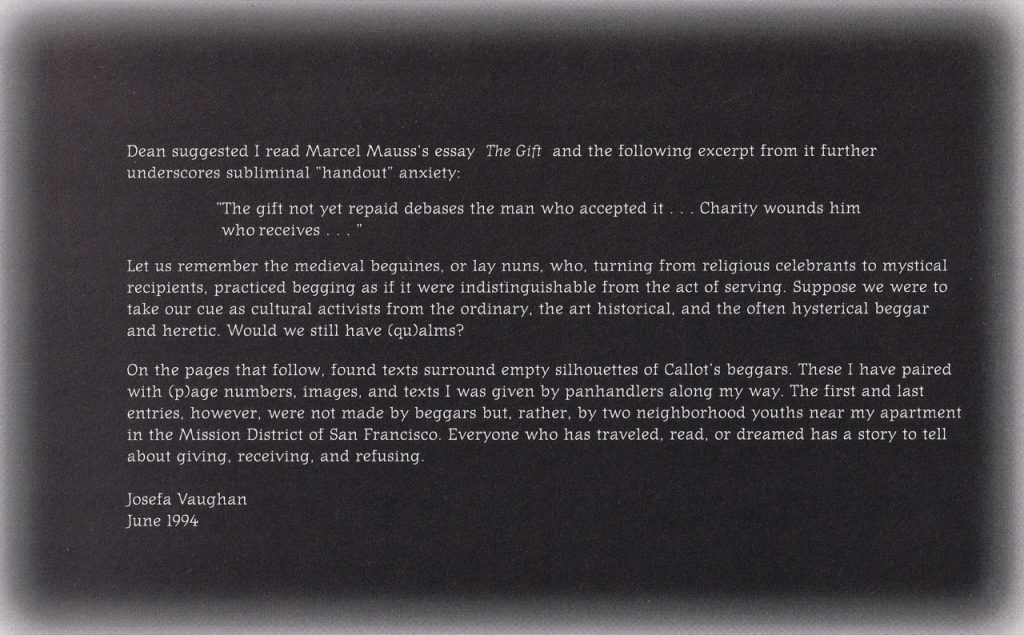
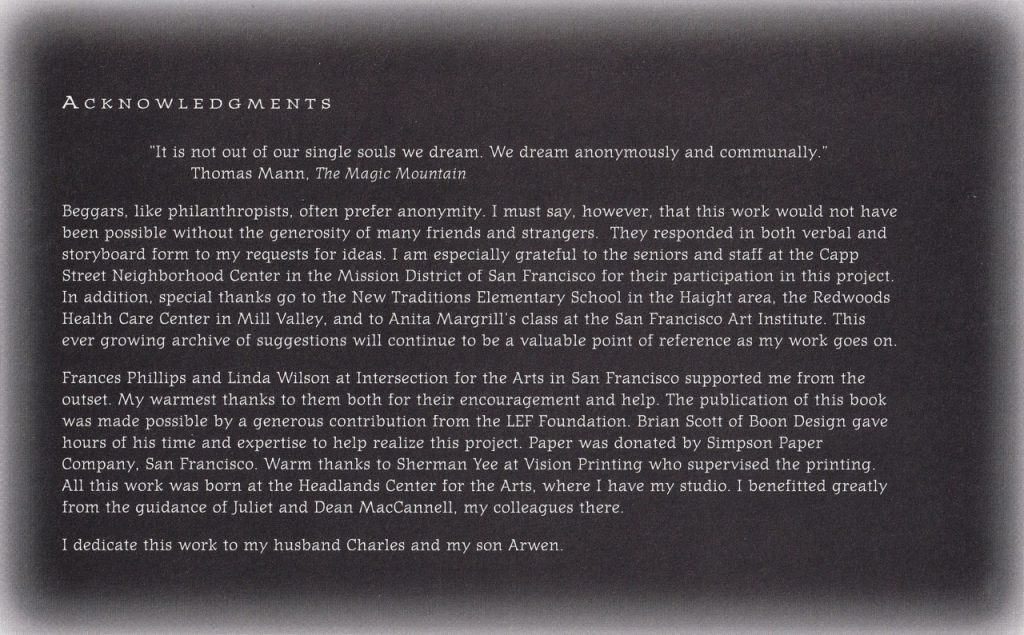
Finally, Vaughan created an artist’s book titled, The Beggartists Workbook to continue disseminating the ideas of, and engagement with, (Qu)alms.